Summer 2020 Newsletter
New Modeling Tool Makes a World of Difference
In our shop on Vashon Island, it can take our engineers weeks to design and build a stove prototype from scratch, test that prototype with real fires and fuel, and draw conclusions about the stove’s performance. To improve on the design, the entire process must be repeated. Experimentation in a real world setting requires lots of time and materials. However, a new volunteers and an advanced calculation method is starting to change all of that.
In front of a computer, BDL volunteer Allan Walsh can perform these experiments for a fraction of the time and cost with a powerful tool called Computational Fluid Dynamics (CFD). CFD combines fluid mechanics (the physics of gases and liquids) and mathematical equations called Navier-Stokes Equations with computer programing to simulate real world conditions. To perform these computations, CFD breaks an object down into digitized cells, like pixels in a photograph, and simulates the lifelike flow of liquids or gases across the entire system. CFD is often used in the aerospace industry to simulate flight conditions.
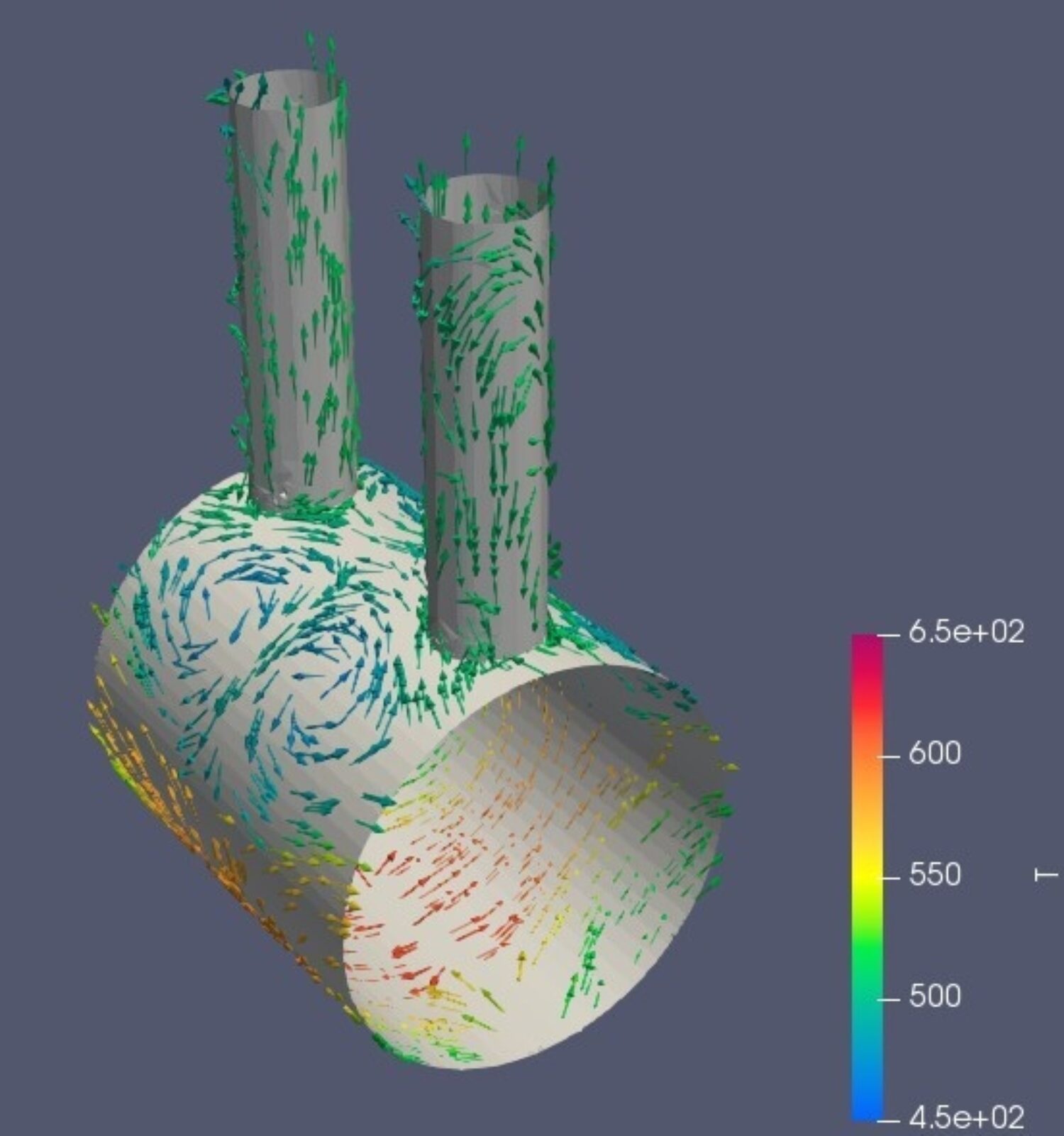
CFD simulation showing airflow within the shea roaster prototype.
For BDL, CFD modeling is a way to simulate the cookstove, shea roaster, or other system design on the computer without having to build and test the design concept first. This is hugely important for cookstoves because understanding how design changes impact the air flow, gas movement, and heat transfer inside the stove is essential to achieving high efficiency and low emissions for end users. For example, using CFD we can learn how design changes impact the flow of hot gases inside of a shea roaster or where there are temperature hot spots inside of a stove’s combustion chamber. CFD modeling allows us to easily make changes to the prototype design and then run simulations to determine the benefits (or not) of that design change.
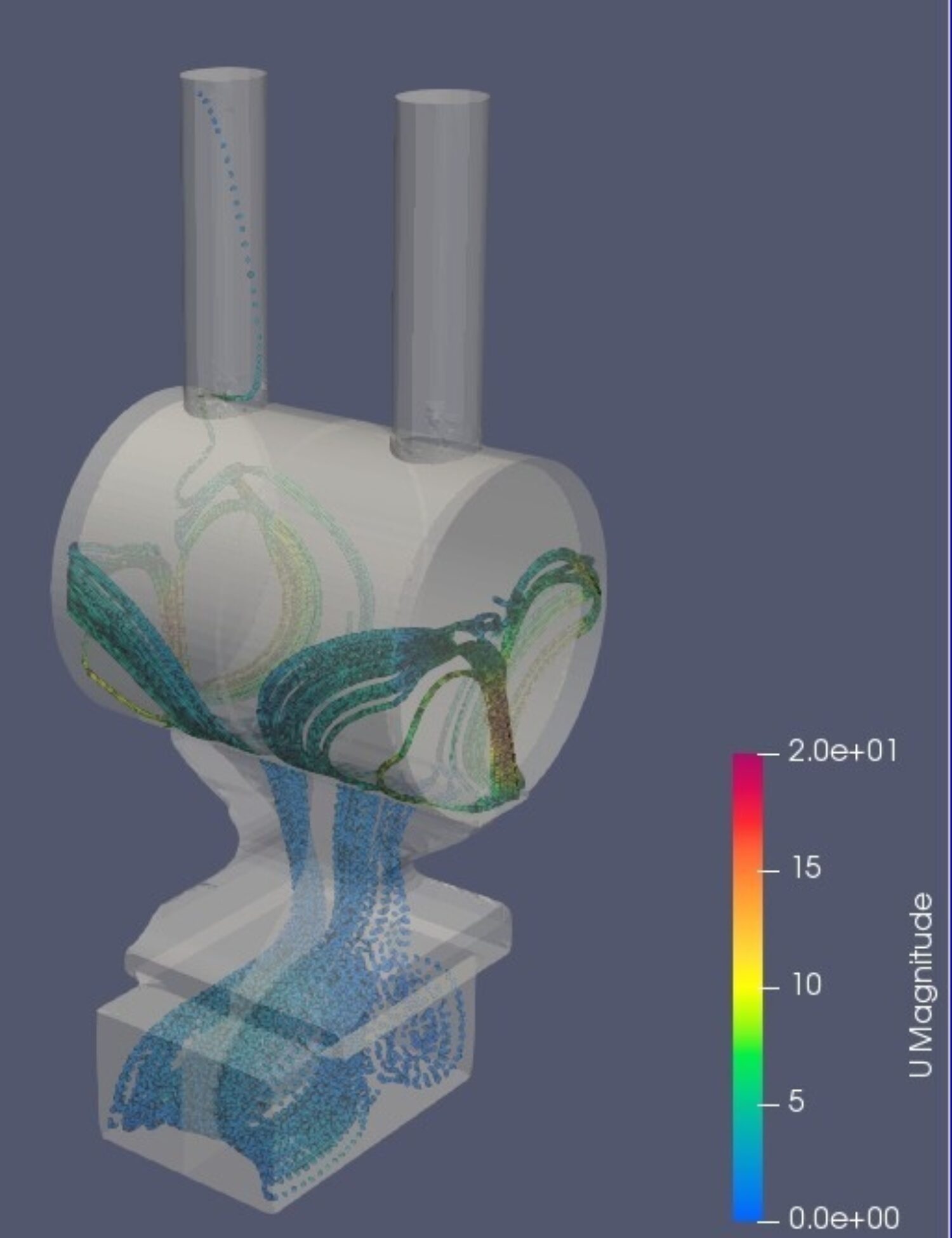
Shea roaster prototype after running a CFD modeling simulation.
Burn Design Lab is extremely fortunate to have been connected with Allan Walsh. “I had done CFD modeling for industrial applications of combustion for over 30 years, before retiring about a year ago,” Allan explained. “A few months ago, I was introduced to BDL by a former colleague and wanted to be involved again in CFD modeling.” Allan’s CFD work has become an integral part of the Improved Shea Roaster project as we continue to develop a more fuel-efficient roaster for shea nuts in Ghana. When asked about his work with BDL so far, Allan shared, “The experience with working with BDL has been great. I am excited about the possibilities for seeing the implementation of new designs that I have had a role in modeling. CFD modeling has the potential to add to the wealth of technology already developed.”
Incorporating CFD modeling into the product development process allows us to explore potential design variations more quickly, which ultimately allows us to provide a better product in less time to the women and families that need them.